


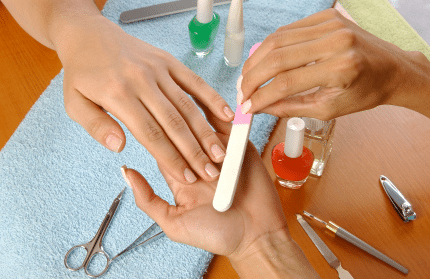
In the age of social media, nails have become the ultimate accessory. Scroll through Instagram or TikTok, and you will see that a manicure is no longer just a grooming habit—it is a loud, proud fashion statement. From intricate hand-painted designs to structural enhancements like coffin or stiletto shapes, the nail industry is exploding with creativity.
However, behind every viral nail set is a technician who is part artist and part structural engineer. Becoming an Advanced Manicurist requires a level of precision that few other beauty trades demand. You are working on a canvas that is barely an inch wide, using chemicals that must be mixed to exact ratios to ensure durability without damaging the natural nail. In Lancaster, where style meets substance, clients are looking for technicians who can deliver that “Instagram-worthy” look without sacrificing the health of their hands.
The Chemistry of Adhesion and Structure
Creating an artificial nail that stays on for three weeks without lifting is a feat of chemistry. Whether you are working with liquid and powder (acrylic), hard gels, or dip systems, you are manipulating polymers. If your liquid-to-powder ratio is too wet, the nail will be weak and prone to allergic reactions. If it’s too dry, it will be brittle and snap.
Shutterstock
Furthermore, the “architecture” of the nail matters. A good manicurist understands the “apex” (the highest point of the nail) and the “C-curve” (the arch). These aren’t just aesthetic choices; they provide the strength needed to absorb shock. Without proper structure, a long nail acts like a lever; one accidental bump against a car door can tear the natural nail bed. Mastering these structural concepts is what separates a discount salon worker from a high-end Nail Specialist. Leading trade publications like Nails Magazine frequently feature technical guides on how advanced filing techniques and product placement prevent service breakdown.
Sanitation: The Mark of a Professional
Let’s talk about the elephant in the room: safety. We have all heard horror stories of infections from unsanitary salons. As a licensed Manicurist, you are the guardian of your client’s health. Understanding the difference between “cleaning” (removing dirt), “sanitizing” (reducing bacteria), and “sterilizing” (killing all microbial life) is the most critical part of your education.
Clients today are educated. They watch to see if you open a fresh pack of files, if your metal implements come from a sterilized pouch, and if you properly disinfect your pedicure throne. By adhering to the strict guidelines set by the state board and agencies like OSHA, you build immense trust. A client will drive past ten cheaper salons to sit in the chair of a technician they know is safe and clean.
The Artistry of the “Advanced” Tech
Once the science and safety are mastered, the fun begins. Nail art is a boundless playground. Chrome powders, cat-eye magnetics, 3D encapsulation, and character art are all high-ticket add-ons that boost your income.
As an Advanced Manicurist, you essentially run a freelance art studio. You have the freedom to develop a signature style—whether that’s minimalist geometry or maximalist bling. This artistic capability turns a routine service into a luxury experience, allowing you to charge premium rates and build a portfolio that markets itself.
Your Lancaster, CA Experts for Advanced Manicurist Training
Do you have a steady hand and a creative eye? We teach you the chemistry, the safety protocols, and the artistic techniques needed to become a top-tier technician in the Antelope Valley. Trust Lancaster Beauty School to polish your potential. Explore our Advanced Manicurist program details or request a tour via our Contact Us link.
Start Your Beauty Career at Lancaster Beauty School
Lancaster Beauty School has trained licensed beauty professionals in the Antelope Valley for decades. Explore our Cosmetology, Barbering, and Esthetician programs, then apply for admission to get started.

 English
  Spanish
  French